Join us for Cal Day & Gala – Send us your news

I-House Connection
Dear I-House Alumni and Friends,

As we approach the completion of our Dining Commons Transformation Project, we are pleased to share this behind the scenes look at our progress. Completion of construction is scheduled for June, 2015.  We’re looking forward to welcoming you back to dining under the dome. Be sure to check out our temporary dining facilities at the Stadium Field Club.

Tickets are still available for our 27th annual Celebration and Awards Gala on April 30th, I-House’s signature event that celebrates those championing the values of International House in their personal and professional lives. More details below. Continue reading

Posted in Activities, I-House Alumni | Tagged , , | Leave a comment

What Is Intercultural Competence? Part 2

In my first post on this topic I discussed the basics of intercultural competence. Here we dig a little deeper, using something called the Intercultural Development Continuum, or IDC. Here’s what the IDC looks like:

Posted in Center for Intercultural Leadership (CIL) | Tagged , | 1 Comment

The Psychology of a Peach

In this post we’ll continue the theme from last week’s post, delving into the social psychology of U.S. American “peachiness” — the relative shallowness of many U.S. American social ties.

In 1971, anthropologist Francis Hsu published the intimidatingly titled “Psychosocial Homeostasis and Jen: Conceptual Tools for Advancing Psychological Anthropology” (American Anthropologist, New Series, Vol. 73, No. 1, pp. 23-44). In the essay he sketches out a model for understanding differences between the psychologies of Chinese people and Westerners.

He uses this image (p. 25) to make his point: Continue reading

Posted in Center for Intercultural Leadership (CIL) | Tagged , | Leave a comment

Culture as an iceberg, uncoding cultural dimensions

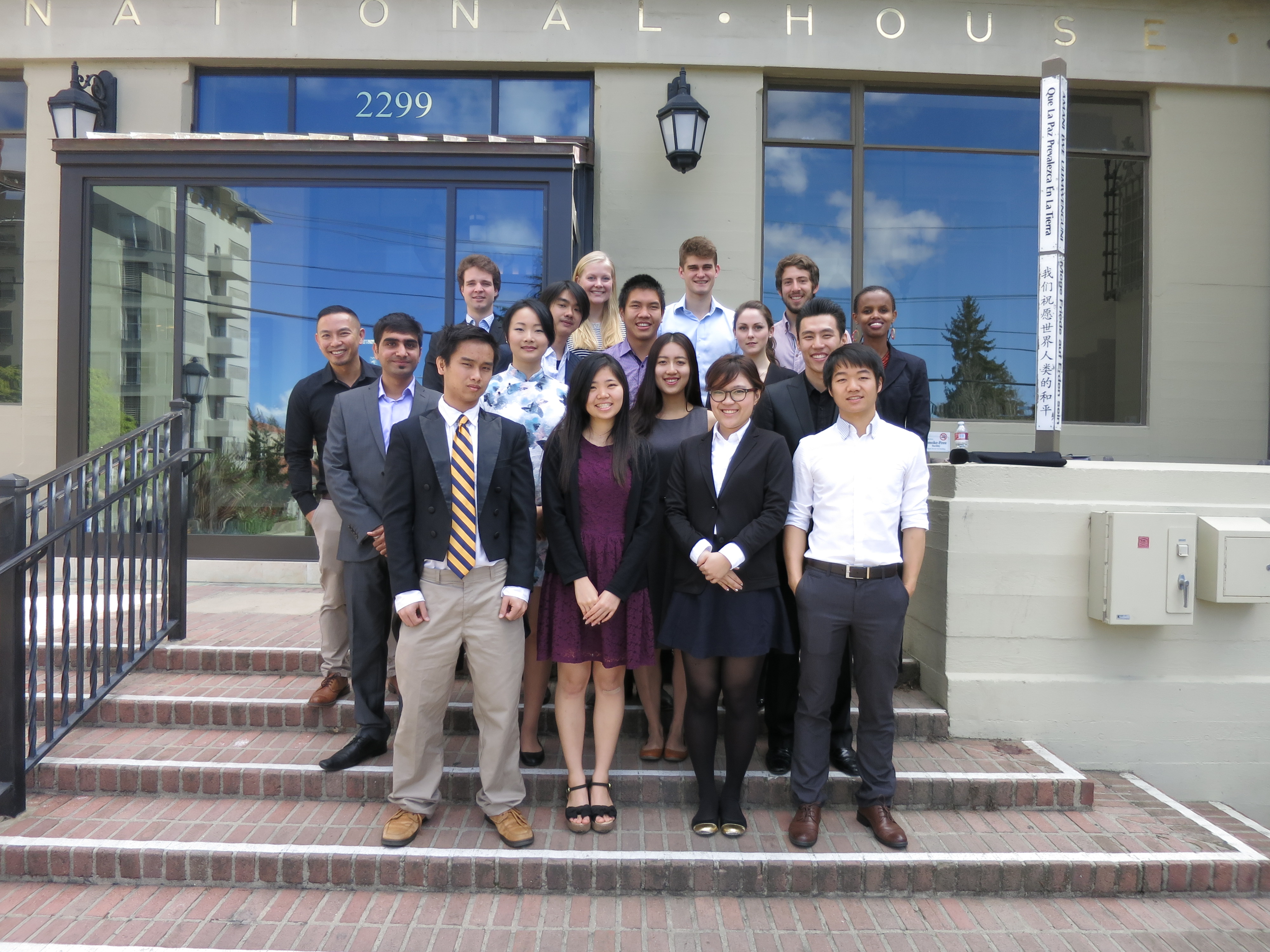
Our Spring 2015 Intercultural Leadership Initiative (ILI) Cohort on the front steps of I-House

Our Spring 2015 Intercultural Leadership Initiative (ILI) Cohort on the front steps of I-House

This week’s session of the Intercultural Leadership Initiative was as informative as the past ones. To kickstart our class session on Wednesday, we discussed the dimensions of culture, using “the iceberg concept of culture.” Obviously, culture is such a broad and abstract topic, that an analogy such as this one comes in handy in trying to understand culture. Indeed, as human beings, what we notice about cultures foreign to us is very little—the obvious elements—or using the analogy, “just the tip of the iceberg,” namely their music, their literature, etc.  Culture is much more than that; it encompasses notions of modesty, conception of beauty, nature of friendships, patterns of handling and expressing emotions, notions of leadership, value of time, conception of justice, to mention but a few. We had a profound discussion about this, and it is definitely discussions like this that really give meaning to why I am taking this course before graduation in about two months. Continue reading

Posted in Intercultural Leadership Initiative (ILI) | Tagged , , | 1 Comment

“Peachy” U.S. Americans, Part 2

In a recent post I introduced readers to the concept of “peach” cultures and “coconut” cultures. Then yesterday a colleague sent me a link to this article from the UC Davis student newspaper, which discusses the same issue.

Land Without Ghosts BookAll this talk about U.S. Americans and our “superficial” relationships got me thinking about an article I read several years ago by a famous Chinese anthropologist, Fei Xiaotong. Fei, probably China’s best-known anthropologist, spent the 1943–44 academic year in the United States, during the closing phase of World War II. He observed that America is a “land without ghosts,” which became the title of a collection of essays by Chinese visitors to the U.S. (Land Without Ghosts: Chinese Impressions of America from the Mid-Nineteenth Century to the Present, ed. R. David Arkush and Leo O. Lee, Berkeley, University of California Press, 1989). His own childhood, filled with “ghosts” — echoes of deep human relationships — stood in stark contrast to the “ghostless” U.S. He wrote: Continue reading

Posted in Center for Intercultural Leadership (CIL) | Tagged , | 3 Comments

TedXBerkeley: Wisdom, Compassion, Connection

I saw my first TED talk when I was in college and was captivated. Ever since then, I have seen many online. When I got a last-minute ticket to TEDXBerkeley through an I-House friend, I was pumped to experience the TED magic myself!

The theme of the event was Wisdom, Compassion, Connection, and speakers weaved those themes into their presentations. The 7+ hour event had too many interesting things to share here, but I’ll note a few speakers that really stood out.

Dan Garcia, a Computer Science professor here at UC Berkeley, appeared on stage on a unicycle to start his fascinating speech. As someone with little knowledge of computer science, I walked away with a greater understanding of the importance of the field, especially in regards to Computer Science education. Continue reading

Posted in Life at I-House | Tagged | Leave a comment

Eye of the Beholder

In our CIL workshops we often begin with a short discussion of what we mean by “culture.” People are often surprised to find out how deeply culture affects our moment-to-moment existence. In fact, it turns out, culture affects even how we see the world.

A study was published in 2000 by Li-Jun Ji, Kaiping Peng (of our own UC Berkeley) and Richard E. Nisbett (Culture, Control and Perception of Relationships in the Environment, Journal of Personality and Social Psychology, 2000, vol. 78, No. 5, 943-955). Two groups of subjects — European Americans and Chinese (from Taiwan), all undergraduates at the University of Michigan — took the “rod and frame” test. The apparatus looks like this:

Rod and frame apparatus

Continue reading

Posted in Center for Intercultural Leadership (CIL) | Tagged , | Leave a comment

Where are they now? David Fanfan

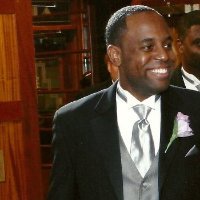
David FanfanGreetings from Berkeley. This month, we feature I-House alumnus and marathon runner David Fanfan for our Where are they now series.  Not only does he have an excellent last name, David is one of I-House’s biggest “fans” on social media.  Highlights from our email conversation are below.

So, where is David now?
Hint:  It’s the city where the first International House opened in 1924. Continue reading

Posted in I-House Alumni | Tagged , , | 4 Comments

The migrant experience

Oakland's Chinatown

Oakland’s Chinatown

Saturday’s Intercultural Leadership Initiative (ILI) field trip through the streets of Oakland was a very enlightening and fulfilling experience. We began the trip in the Fruitvale district, a predominantly Hispanic community, and wandered aimlessly to discover snippets of Hispanic culture embedded throughout the area. Afterwards, we studied photos taken by Joe Schwartz in the Martin Luther King Jr. Library, which showcases African American history. Subsequently, we roamed through Chinatown and embraced the celebratory atmosphere created by Chinese New Year. Finally, we ended the day with a gratifying meal at a southern style restaurant where we had an extravagant amount of juicy barbecue ribs.

After spending a day being immersed in so many different minority communities and reflecting on my own circumstances, I came to a profound realization. Regardless of origin and final settlement, the migrant experience is quite universal. Continue reading

Posted in Intercultural Leadership Initiative (ILI) | Tagged , , | 4 Comments

The experience of a Returned Peace Corps Volunteer

(This post is written in both English and Cebuano.  Read the Cebuano translation below. Cebuano is a language spoken by more than 20 million people in the central Philippines.)
(Nagsulat ko ang kining sulat sa Ingles ug sa Bisaya sad. Pagkita ang hubad sa ubos. Naa’y 20+ milyon tawo nga sulti ang lengguwahe nga Bisaya sa sentral Pilipinas.)

Nehama RogozenHello! My name is Nehama Rogozen, and I am a new I-House Blogger for this semester. When I decided to attend UC Berkeley for grad school, living in I-House seemed like a great opportunity to be immersed in a multinational, multicultural environment.

I am someone who straddles two worlds. I am American, but have spent long periods of time living in other countries, immersed in local culture. I am able to think as an American, but also from the point of view of other cultures I’ve been a part of. This has allowed me to explain typical American behaviors and beliefs to my international friends from a more nuanced perspective, as well as explain certain cultural norms of other regions of the world to my American friends. That doesn’t mean that I am some intercultural guru–after all, it would be impossible to get to know every country’s culture and sub-cultures!

Continue reading

Posted in Faces of I-House | Tagged , , , , | Comments Off on The experience of a Returned Peace Corps Volunteer